Page 2 of 8
Re: Blue Winged Olive
Posted: Thu Feb 21, 2019 12:58 pm
by redietz
zen leecher wrote: Thu Feb 21, 2019 11:53 am
Hence the BWO and the baetis should both be termed BWO's, just different sizes.
The problem is, "BWO" is applied to so many different insects that it's almost meaningless. It wouldn't matter so much except that the different insects behave differently, and are often best imitated differently. It's one case where using the Latin makes sense.
Serratella ignita -- the Old World insect which was the original BWO -- and
Drunella cornuta -- a common insect in the Catskills commonly known as BWO -- are both in the same family as Hendricksons and sulfurs. Both are actually olive (at least the adult females -- male ignitas are red) with bluish gray wings. The nymphs are of the clinger type, live in faster water, are rather bulky, and are generally going to be found on bottom except during a hatch. They're best fished dead drifted. (There's also a
Drunella lata likewise called a BWO, similar to a
cornuta, but much smaller.) I personally imitate the adults with a pattern actually called a BWO, and nymphs with a darkish, heavily dubbed flymph.
OTOH, most members of the Baetidae family in the are also called BWO's, whether or not they have have on olive body or have bluish wings. The nymphs are very slender, are active swimmers, and often prefer slower water. When they're in motion (most of the time) they've got their legs tucked against their body, making Sawyer style Pheasant Tail, given some motion, a good imitation. If I'm imitating the adult, a parachute Adams works as well as anything, but I usually prefer a PT soft hackle for all stages of the life cycle.
Other than that, they're exactly the same.
Re: Blue Winged Olive
Posted: Thu Feb 21, 2019 1:47 pm
by tie2fish
This pattern has worked well for me on mid-Atlantic, Cumberland Valley and N. Central PA spring creeks where the "olives" tend to be small most of the time.
Hook: Small dry fly (#18 - #22)
Thread: Griffith's Sheer, 16/0, grey or olive
Hackle: Light blue dun hen
Abdomen: Stripped natural peacock herl
Thorax: Peacock herl, preferably bronzed
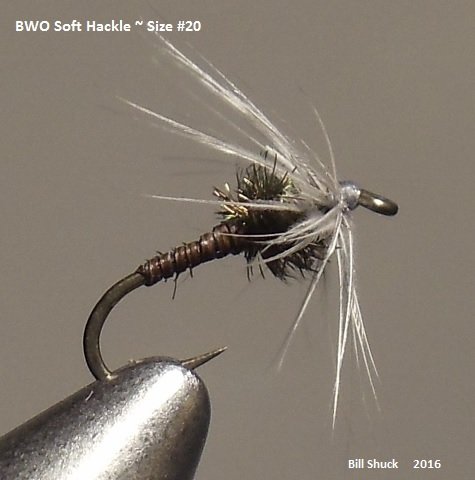
- BWO Soft Hackle Size #20.jpg (29.06 KiB) Viewed 10474 times
Re: Blue Winged Olive
Posted: Thu Feb 21, 2019 5:03 pm
by Trifly
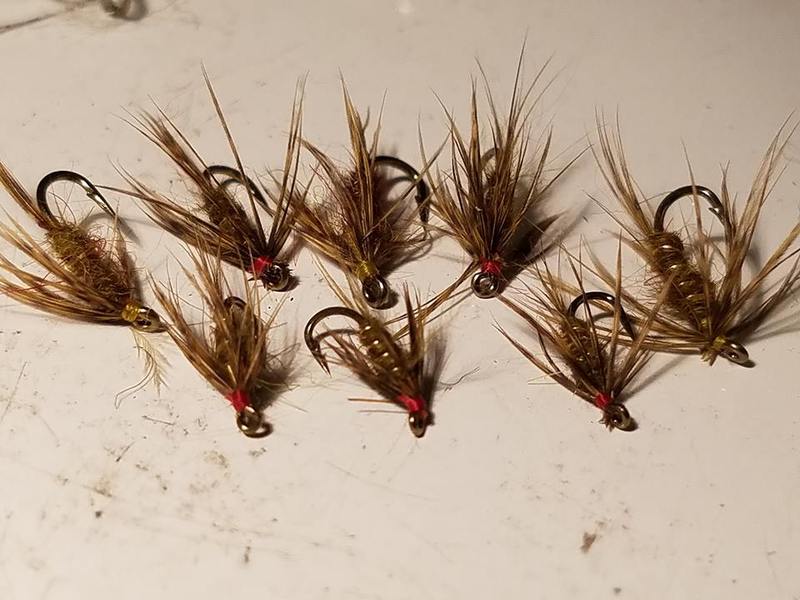
Sizes 18 - 22. Dry or wet hook. Body is rubber leg material that is used on the legs of many Stone Nymphs like the Pats Rubber leg, in olive. Hackle and tail can be Dun or Brown hen, or a combination of the two.
Both patterns are fished in tail water and freestones. in the film or nymphed with spit shot or a Euro rig. Both patterns work well on the swing.
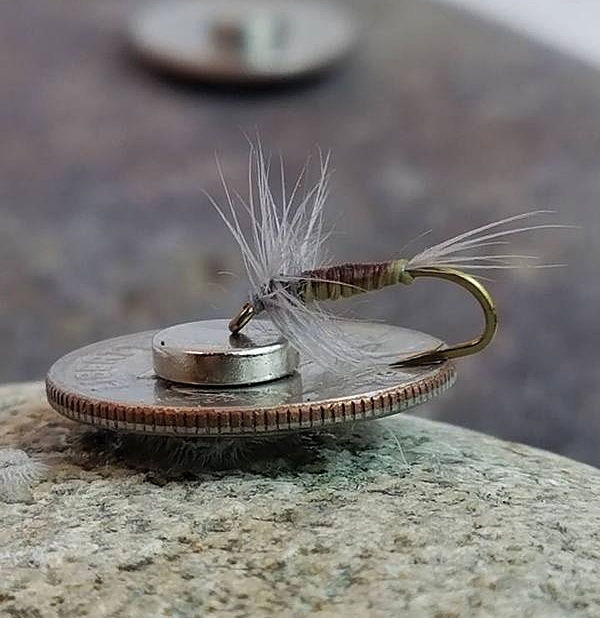
size 18 and 20. Hackle and tail are Olive Brahma hen. Body is olive rabbit fur. Some are ribbed with fine gold wire.
[/url]/Y9mwBGC1/z6.jpg[/img][/url]
I always thought a BWO was a Baetis along with the PMD's. Until this thread I had never heard anything to the contrary.
Re: Blue Winged Olive
Posted: Thu Feb 21, 2019 7:07 pm
by daringduffer
Trifly wrote: Thu Feb 21, 2019 5:03 pm
Sizes 18 - 22. Dry or wet hook. Body is rubber leg material that is used on the legs of many Stone Nymphs like the Pats Rubber leg, in olive. Hackle and tail can be Dun or Brown hen, or a combination of the two.
Both patterns are fished in tail water and freestones. in the film or nymphed with spit shot or a Euro rig. Both patterns work well on the swing.
size 18 and 20. Hackle and tail are Olive Brahma hen. Body is olive rabbit fur. Some are ribbed with fine gold wire.
[/url]/Y9mwBGC1/z6.jpg[/img][/url]
I always thought a BWO was a Baetis along with the PMD's. Until this thread I had never heard anything to the contrary.
Nice little flies. A BWO is what you think of when you say or write it. If one wants other people to know what it means, one has to be more specific. Latin isn't all that bad and no snobbery. Most people have a pretty good life without latin and specifics though. Even fly fishermen.
dd
Re: Blue Winged Olive
Posted: Thu Feb 21, 2019 10:07 pm
by Trifly
I am at a loss for words. Latin or English.
BWO for me and anyone I have talked to for 40 years has been synonymous with Baetis or Baetidae.
A few responses to this thread threw me for a loop.
Re: Blue Winged Olive
Posted: Thu Feb 21, 2019 11:18 pm
by redietz
If you live in a place where there is only one bug (or family of bugs) called BWO, then there's no real ambiguity. Not all of us live in such a place.
Growing up, I had no doubt that BWO referred to cornutas. Schweibert and Flick both called them such (in
Matching the Hatch and the
Streamside Guide, respectively) Baetis were pretty much ignored as being to small to bother with back in the day, and weren't called anything, AFAIK. I've seen the blame assigned to Swisher and Richards for labeling the latter BWOs, when there were already insects that had that name far longer, but who knows. I do know that if somebody tells me that there are BWOs hatching in some Catskills stream, I have no good idea about what I should be prepared to imitate, unless they get more specific.
Troutnut has a good explanation of the problem of calling Baetis BWOs:
http://www.troutnut.com/hatch/180/Mayfl ... ged-Olives
One other major difference between Baetis species others upwings called BWO's is that Baetis lay their eggs underwater, making it all the more likely that I want to use a wet fly to imitate them.
Re: Blue Winged Olive
Posted: Thu Feb 21, 2019 11:32 pm
by Trifly
I have talked to people from all over the country Bob. You seem to be the only person I know of that has an issue with what a BWO is. Or an issue with what other folk call a BWO. I did not dig too deep in to YouTube, but every video I saw knew a BWO was a baetis. Some even knew a PMD was a baetis.
Re: Blue Winged Olive
Posted: Fri Feb 22, 2019 12:01 am
by Bazzer69
Thanks to all the replies to my question. This forum is nothing if only educational. I’m going to imitate all the patterns shown and fish them all!
Barry
Re: Blue Winged Olive
Posted: Fri Feb 22, 2019 12:02 am
by redietz
Re: Blue Winged Olive
Posted: Fri Feb 22, 2019 1:09 am
by Trifly
"Some even knew a PMD was a baetis." I stand corrected on the PMD.